Hello all!
I am back. I am sorry it has been a while. With easter and a few deadlines for my PhD I have been very busy, however, I am ready for a new post. Since last time I have managed to do a bit. I have pretty much managed to finish my analysis (which I thought I had already, but we found another row of boxes). It is now looking like there are around 100 skeletons in the collection. The exact number will be in the next blog post. I have also managed to get things ready for the isotope.
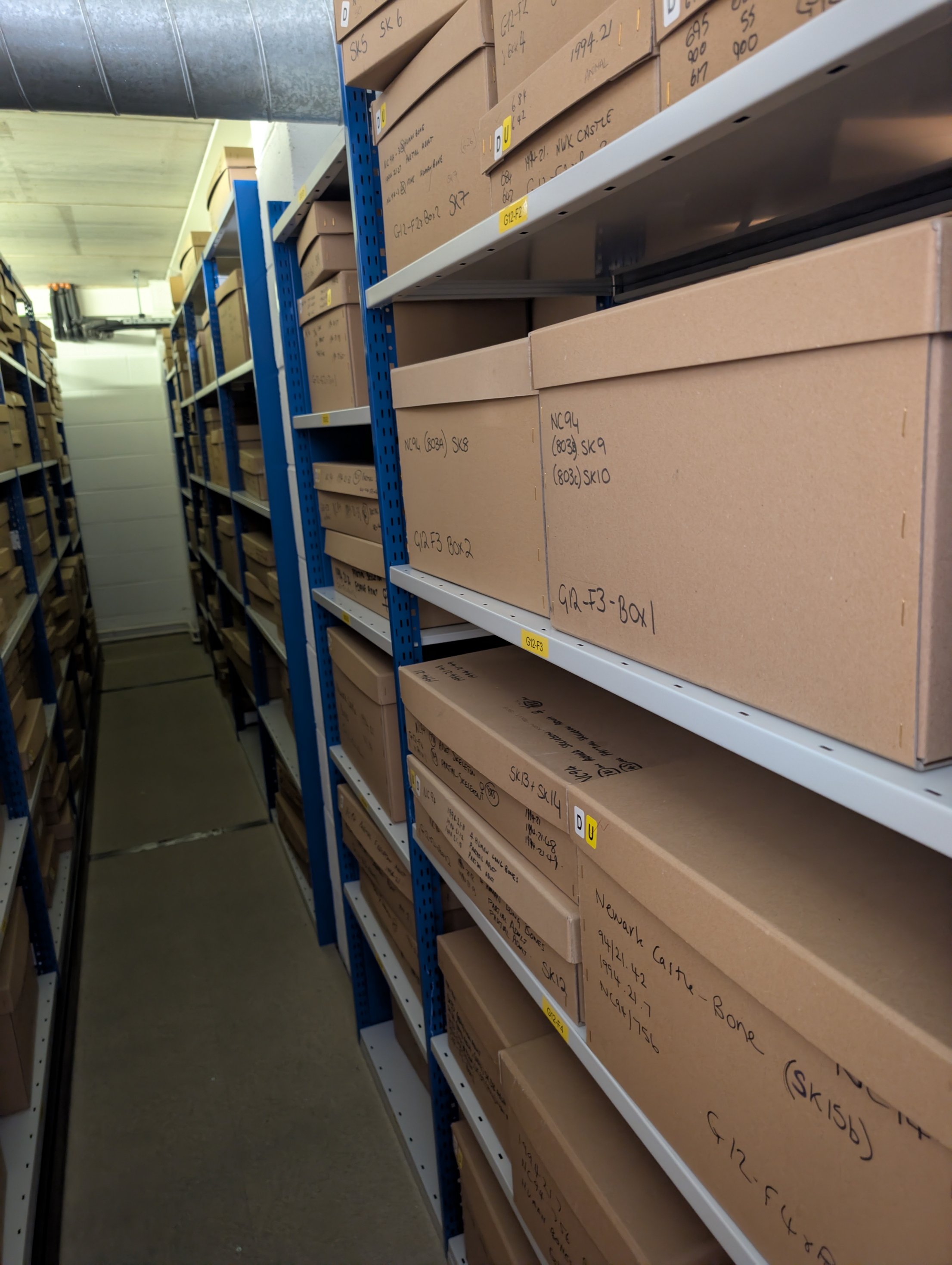
Storage at the archive
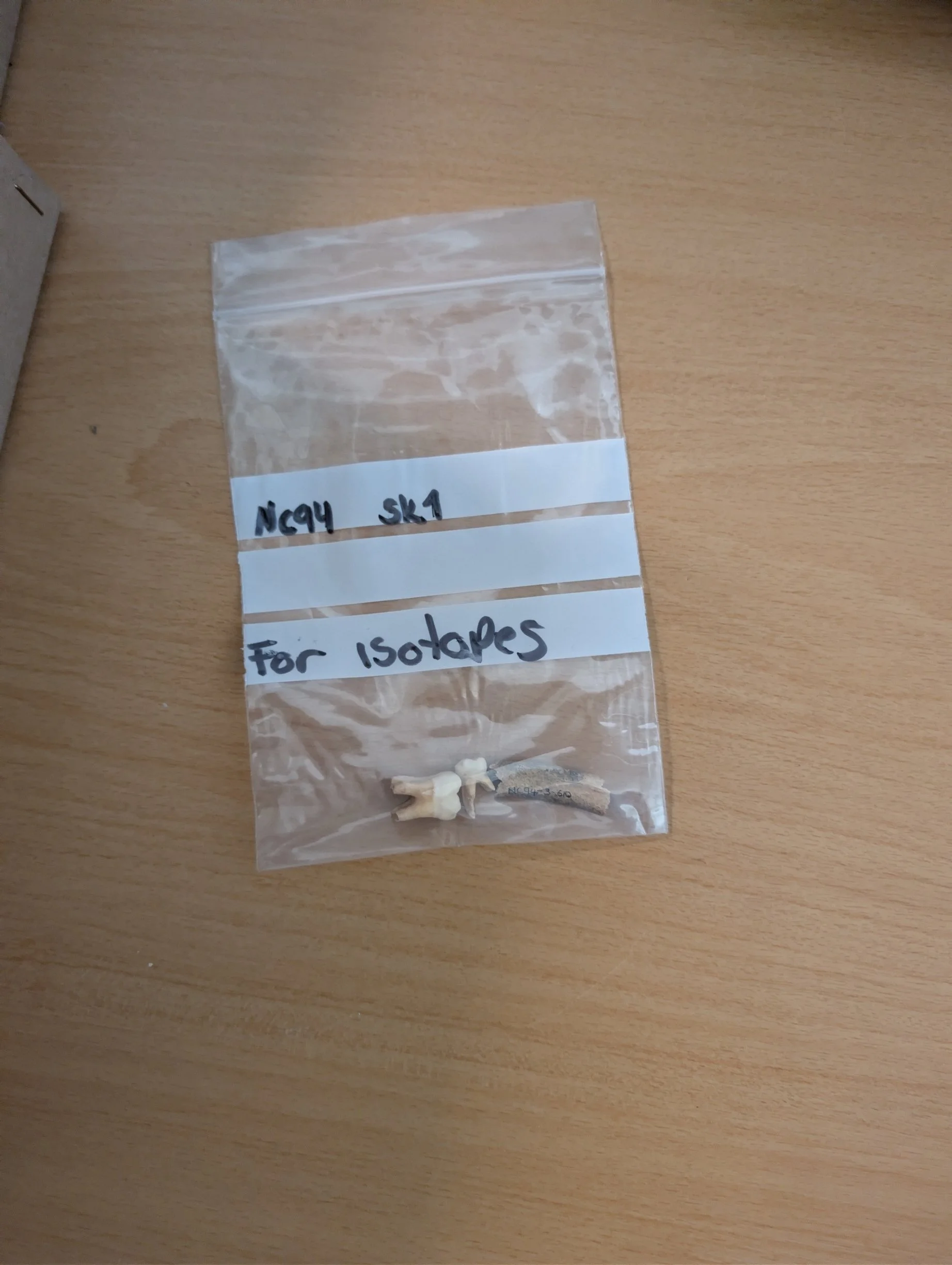
Collection teeth and rib for isotope
So far I have managed to get rib/teeth or both from 77 different individuals. Which is a good number for a collection of around 100 skeletons. We still have not decided if we are doing long bones, as we do need to see what sort of time we have left after the ribs and teeth and the fact that most of them are intact and not broken. I do not want to cut unnecessarily in the bones if we don’t have to.
I have had a few long days at the archive to get the last skeletons analysed and samples prepped. I will be collection them all on the 19th of May and starting in the lab after that.
Essential part of being an archaeologist/osteologist is having tea and biscuit. Then we are happy.
What we have achieved so far with our analysis is: Sexing, aging, stature and pathology. We have also given them their own skeleton number. We have managed to discover skeletons that were probably excavated at different times (due to the nature of the excavation process) but part of the same person, in multiple location and brought them back together. We have attempted to sex, age and give a stature estimation on as many as possible, however, a few of the skeletons where in poor condition or not enough was present, for us to do so. Which is quite normal in archaeological remains. After a 1000 years in the ground, the weight, soil condition, wildlife and disturbance of people will do that. Nevertheless, I am quite surprised at how well preserved most of them are.
What we will do now: reorganise the boxes and shelves for all skeletons to be in order of skeleton number and make sure the boxes are easier to read and get information from. We will repack the boxes using acid free paper and bags to try and separate each individual.
These boxes were packed after the excavation in 1994 and have not been opened many times after that. We have to remember that this is the reality of smaller museums around the country. They don’t have budgets or enough people to go through all their boxes. Boxes that have been sat for longer than these have as well. On top of that, they are getting new artifacts and finds in all the time, which will take up more of their time and space. These need to be assessed, logged and stored. They require volunteers to come and help out with some of their other collections.
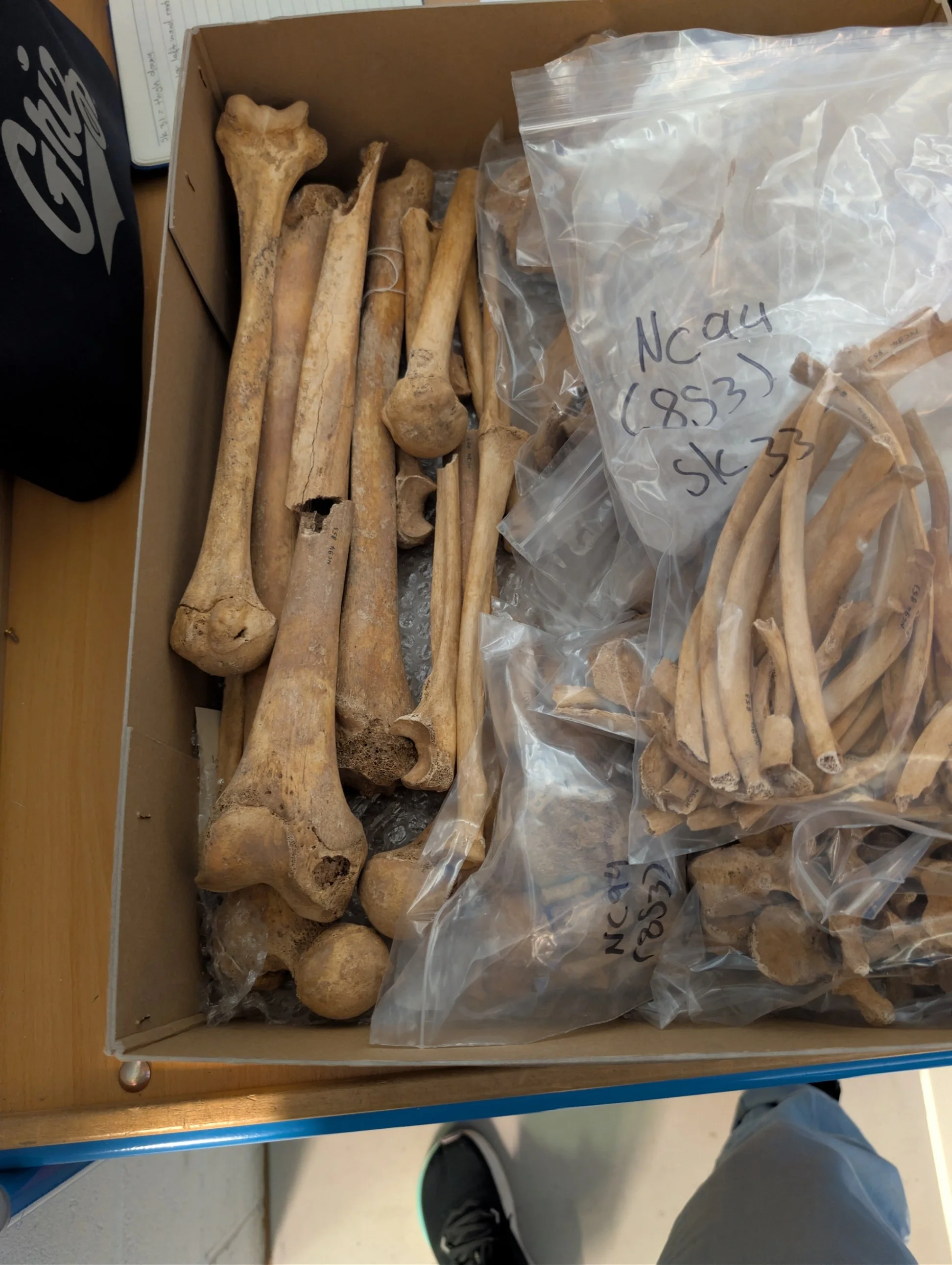
Box before it has been repacked
Anyway, I have also been enjoying the good weather we have had. It helps with the mood and motivation.
I shall update you after my first lab session towards the end of may.
Tanja
