Hello all.
We have got to the stage where I am finally starting my actual isotope analysis. I have finished my macroscopic analysis of the human remains. Which is a full review of what bones are present in each individual. Sexing, aging, stature and pathology have been assessed where possible. We have created a skeleton sheet for most of them, which the museum can use as they want. I have collected a rib sample from the skeletons that have them and a second or third molar. All of these have now been transported down to the Macdonald institute and the Dorothy Garrod lab, where I have cut 60 ribs down to between 0.5g - 1g in weight. Not only have I cut them to size I have also put them in acid and started the process of collagen extraction. This is all done using the lab instructions and set methods provided to me.
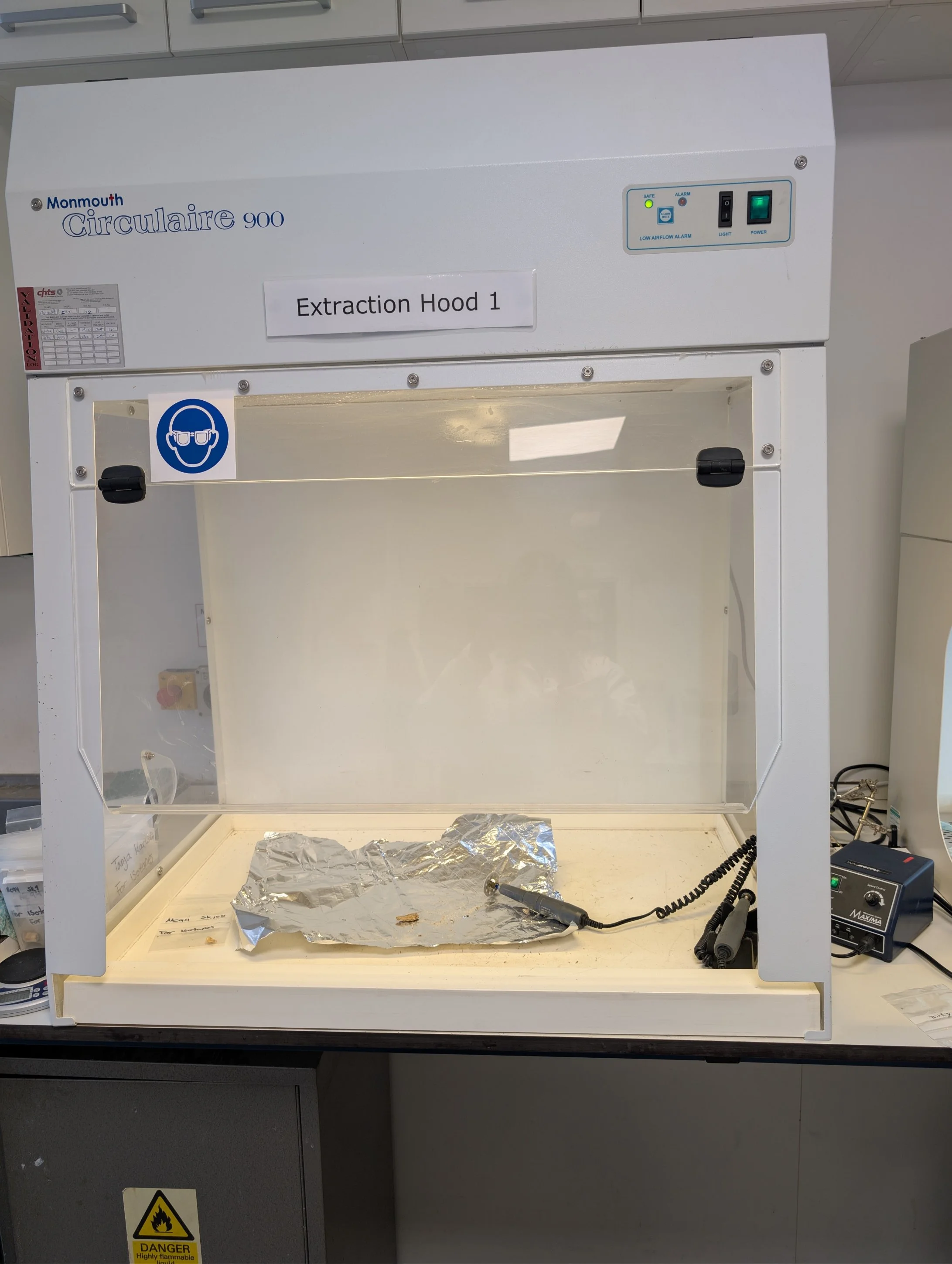
Extraction hood for bone cutting. First I polish the bone down (sandblaster is out of order at the moment so we use a brush on the drill handle) then cutting it to size. Both to the correct weight but also the right size, as it needs to fit in the tube.
You might wonder why I am extracting collagen from the ribs and the teeth. I will try and explain it in a way that makes sense and is short. Because to be fair, it does not always make sense to me either. Collagen holds stable information on carbon and nitrogen isotopes, which we can read and use in our attempt to understand past diet. Teeth does not remodel over the years so the information we get from them is retained from childhood, while bone, like ribs, do remodel and will retain information from a few years before death. That is, very basic, but what we want to do essentially. I am hoping all my ribs are well enough preserved to have retained the information that I need, but we will not know that before the end.
Using the brush and cutter to clean the bones and cut them to the right size and weight
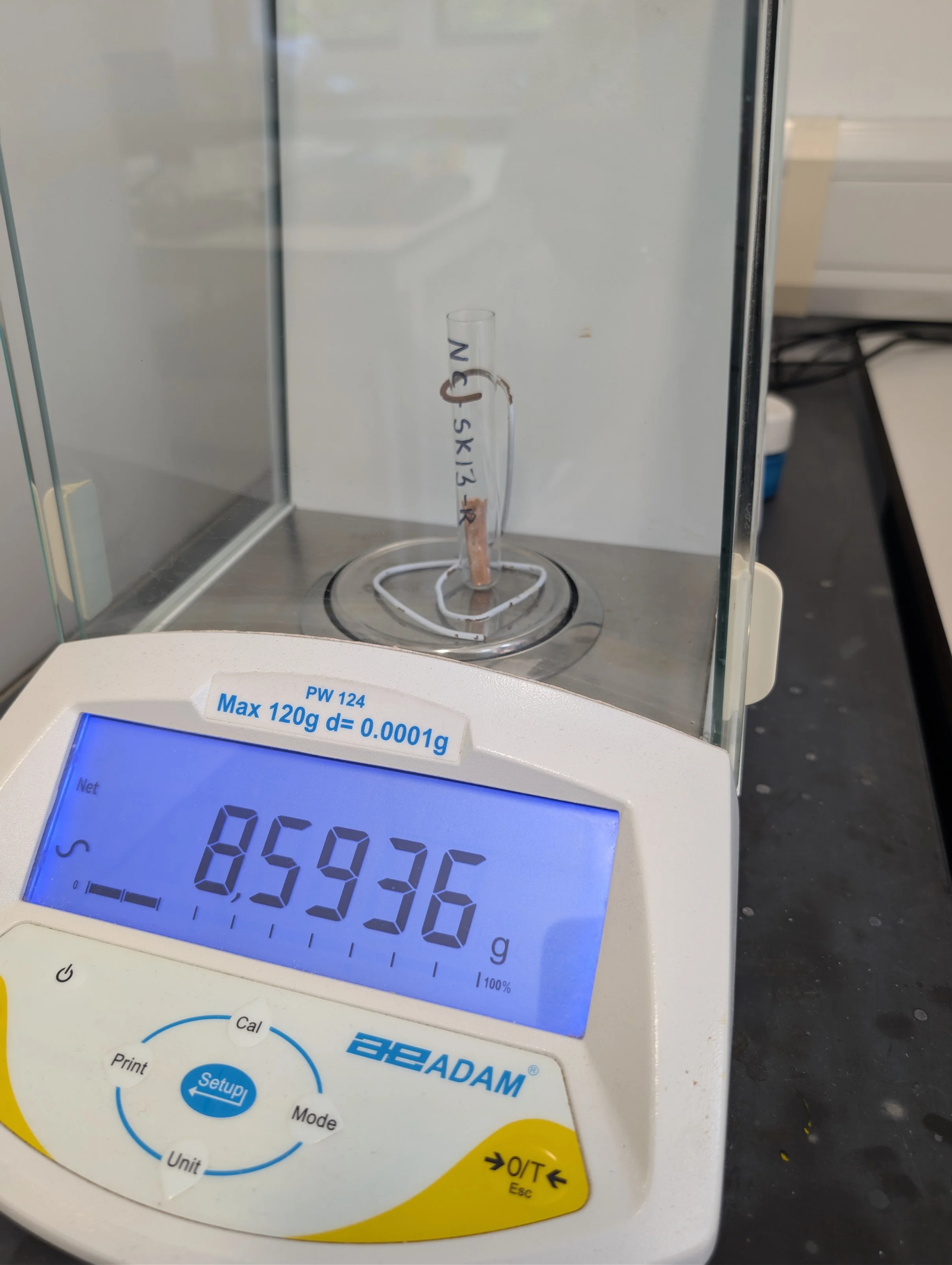
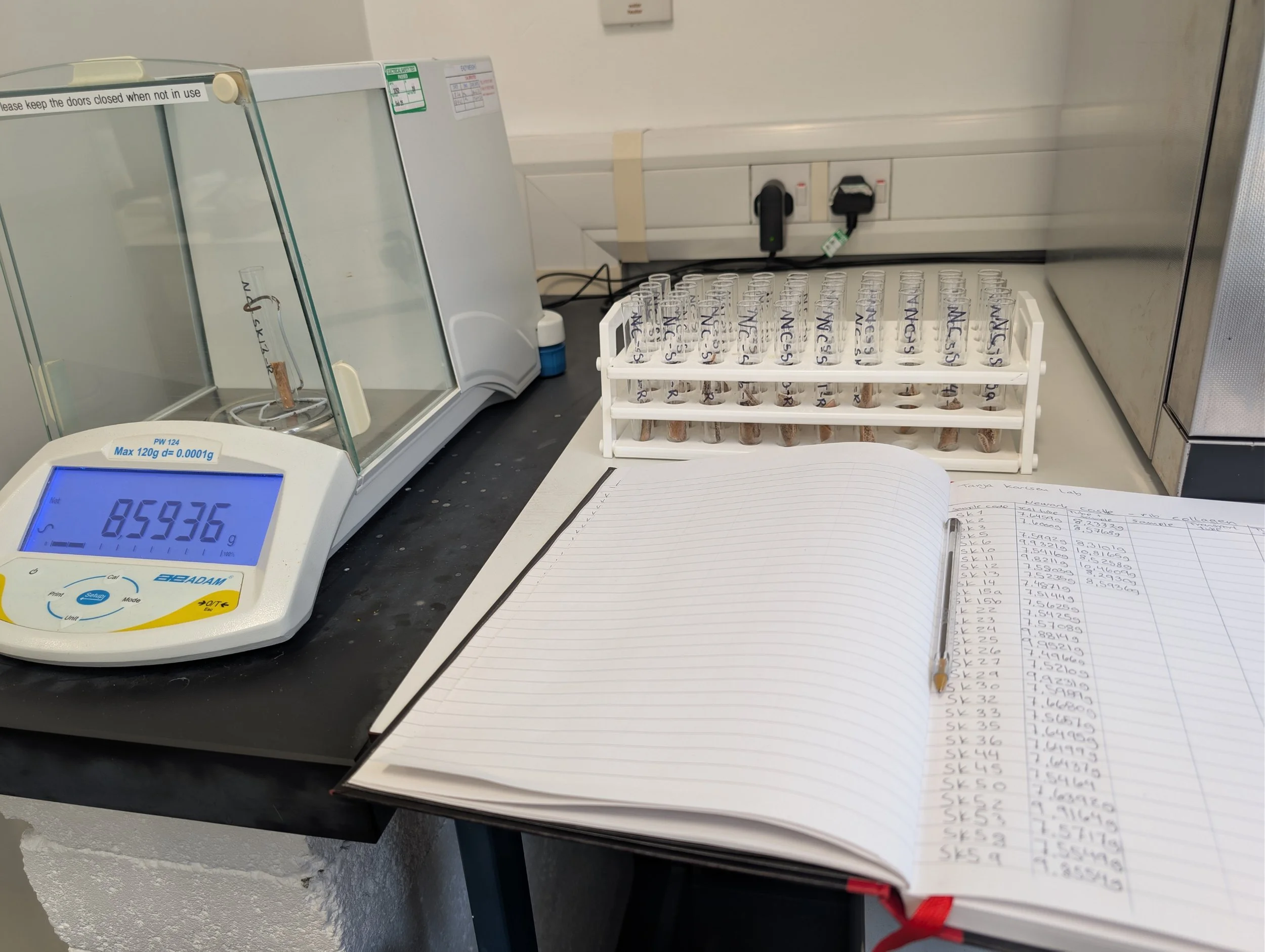
The tube has already been weighed before sample is in, but we also weigh it after sample has been added, then we know the exact weight of the bone as it is in the tube.
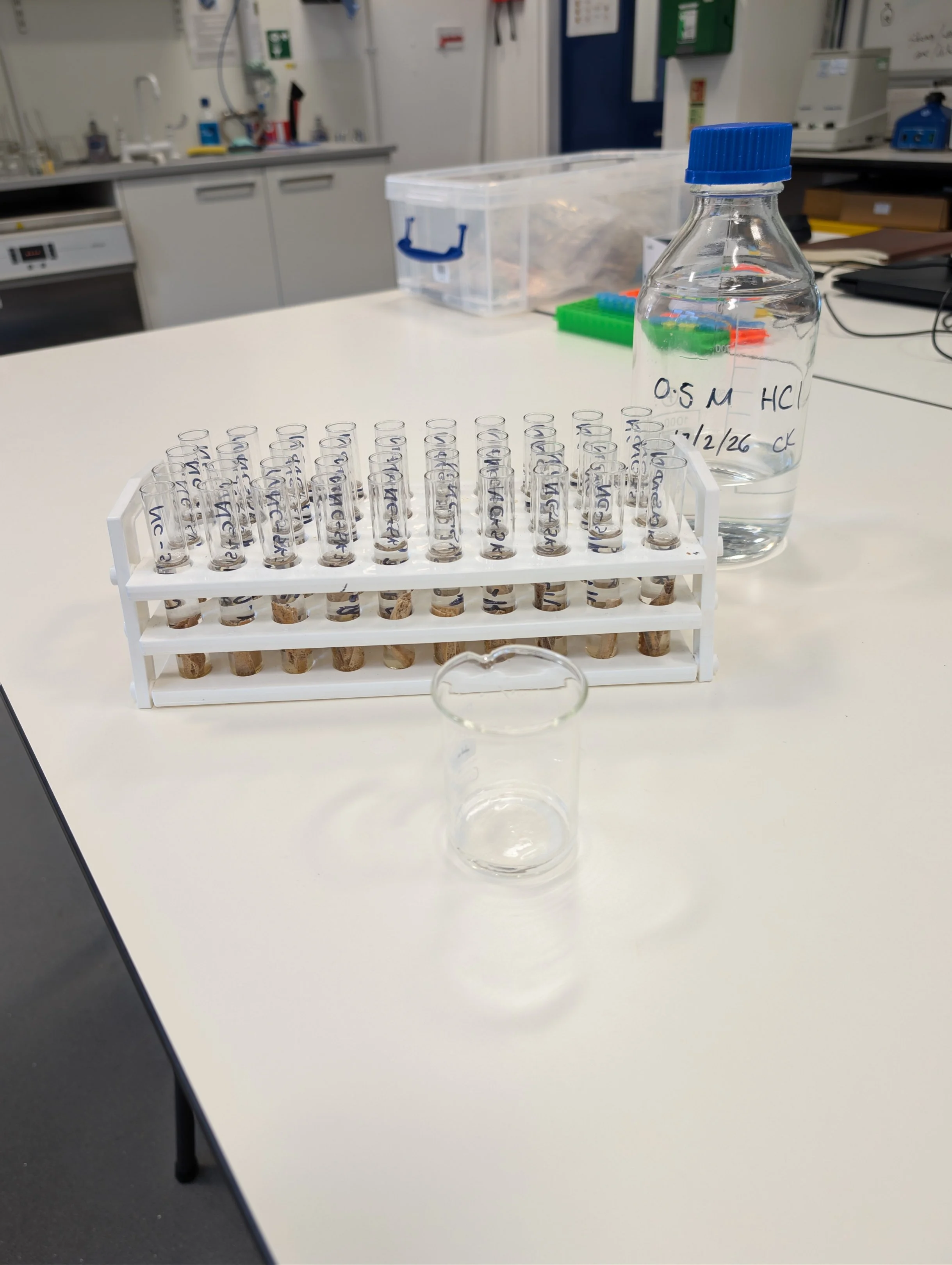
Acid has been added to the tubes (0.5 m HCI) and is being changed regularly until the bones have reached the right softness.
There are more steps to this, which I will come back to later. Hopefully the photos and videos I have provided allows you a little insight into the steps and the processes we take when doing this. I will have to thank a few people in that lab up to this point, because this is not something I would have figured out on my own. Alex, another PhD student doing isotopes on a different collection, who has been the person starting out all his training ahead of me and whom I have just watched to absorb all the steps. Catherine, who is the senior research technician in the lab and who just knows everything there is to know and is the most helpful human being for a stressed out PhD student. I appreciate the help so far and I appreciate that I can ask stupid questions without feeling too stupid, because believe me, sometimes I feel very stupid. There are obviously many people that needs to be thanked, but I will get back to everyone later, but for this step I am lucky to have been able to get access to such an amazing lab.
I am soon going to start drilling the teeth I brought down with me, however, I will not start the process of extracting collagen and getting the strontium out before September. I just like to have things ready to go and ready prepped.
Please do ask me any questions if you have any, or show your interest by emailing me. I absolutely love talking about the project to anyone who likes to listen.
Tanja
